
The Fractal Paintings – Genesis and Development of the Series
The Fractal Series
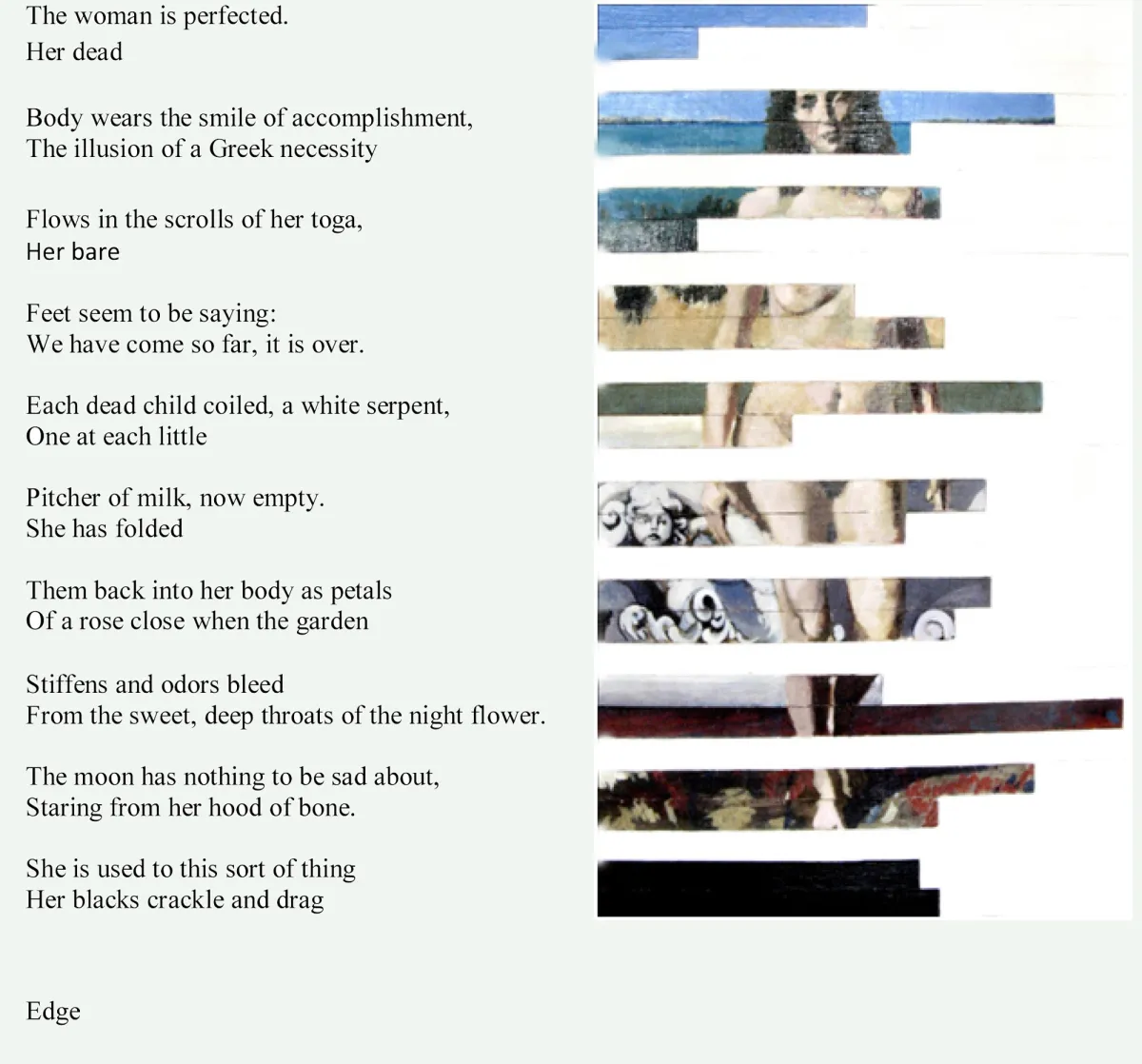
Nicholas Stedman’s Fractal series found its initial impetus in Sylvia Plath’s poem Edge. Stedman was drawn to the poem’s highly visual nature, specifically the "fragmentary couplets" that define its structure. This literary influence merged with his long-standing interest in liminal spaces—the "edges" between water and sky, foliage and light, or the ephemeral spray of water over stone.
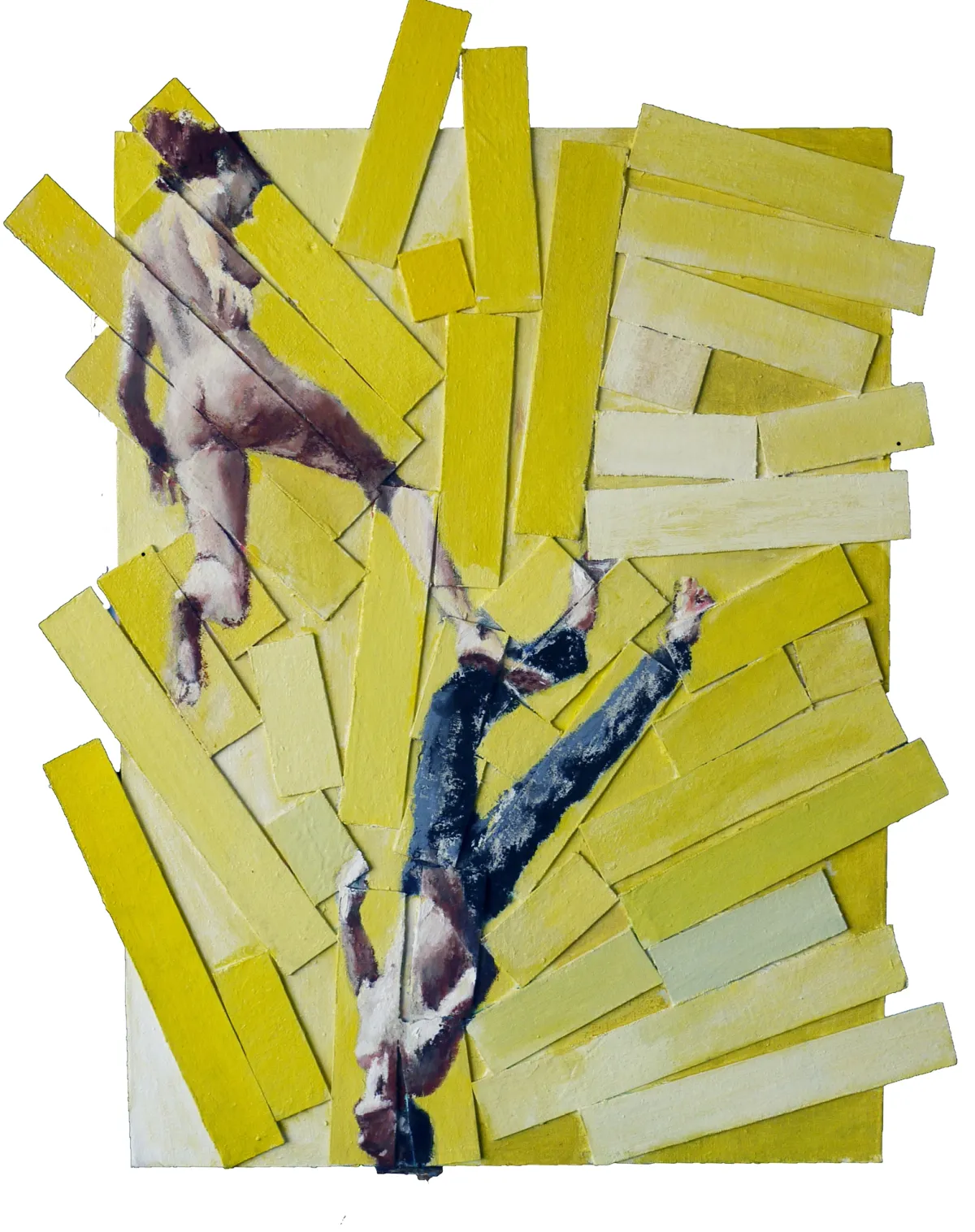
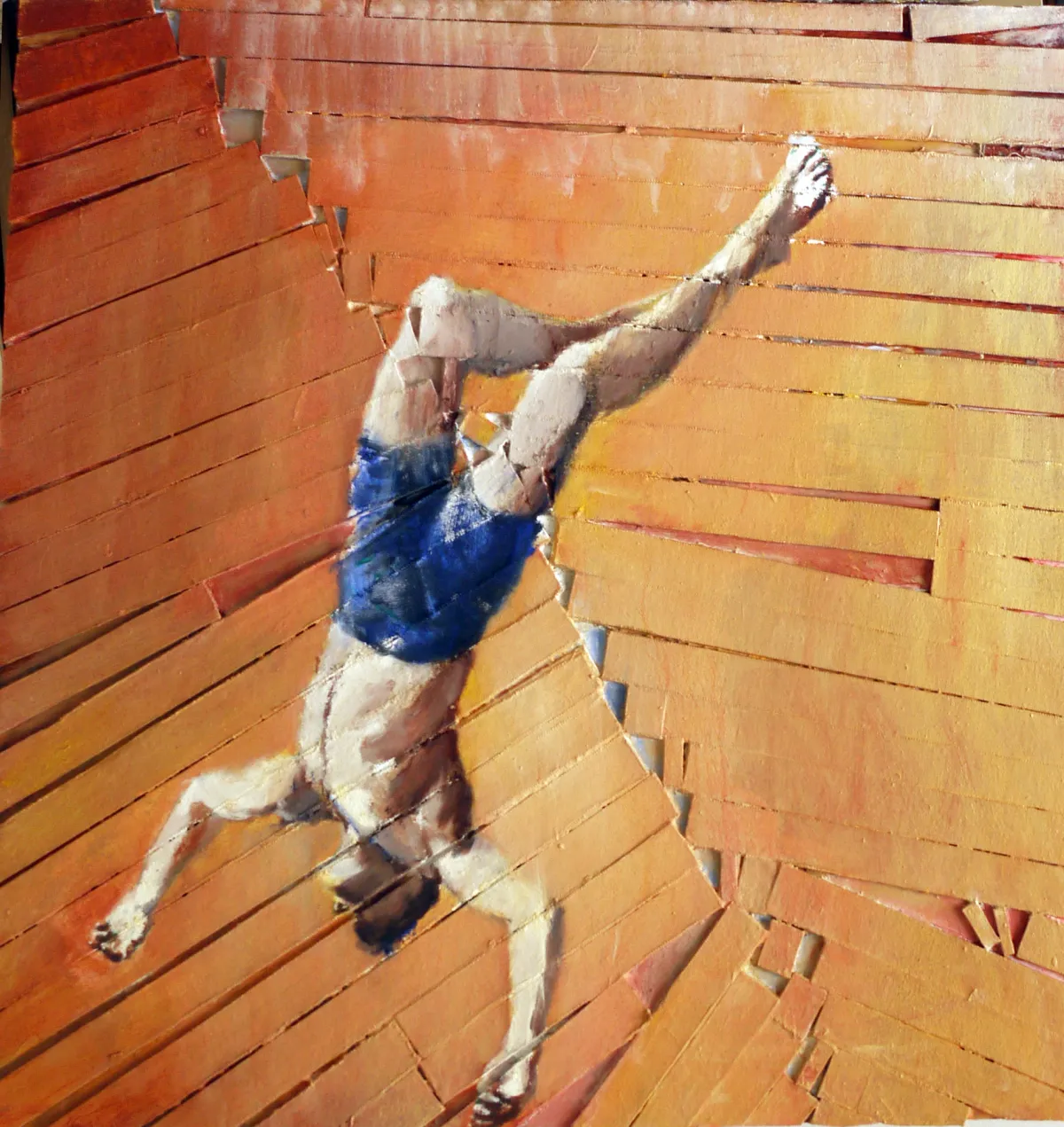
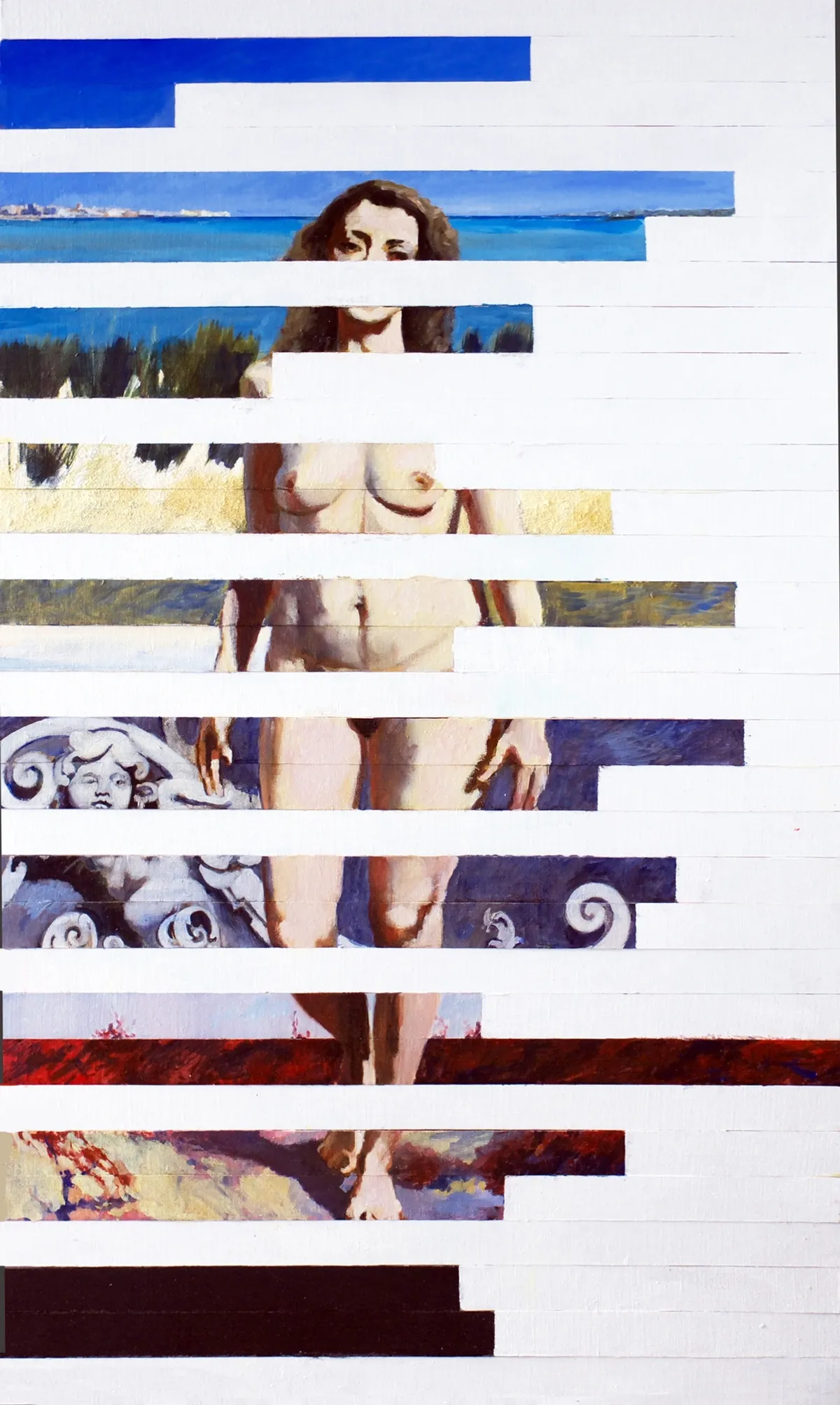
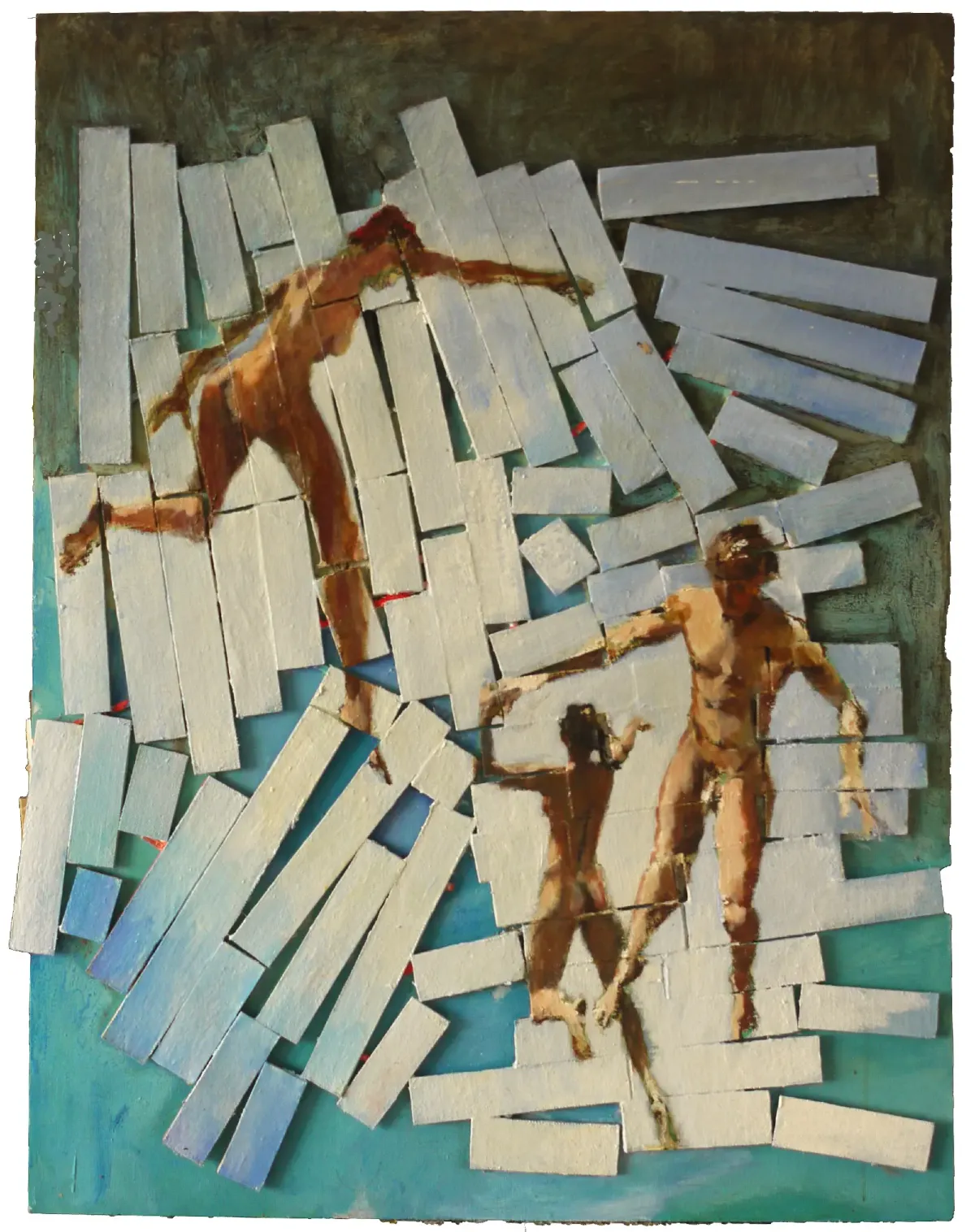
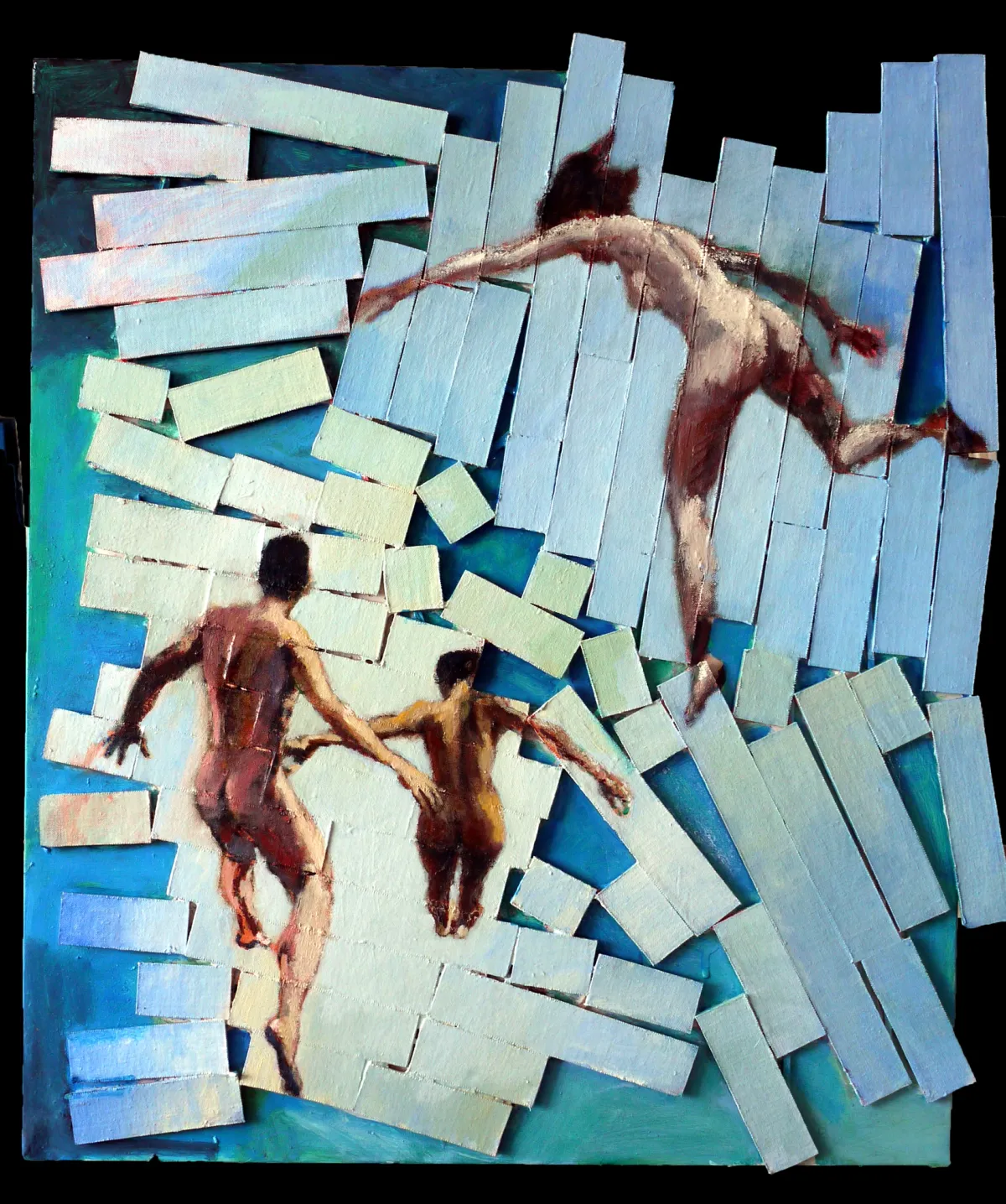
In response to Plath’s rhythmic line breaks, Stedman developed a technique of deconstructing the pictorial surface into horizontal strips. By mounting canvas onto wooden laths, he painted only those sections corresponding to the text, leaving intervening spaces blank to evoke the untouched "white space" of a printed page.
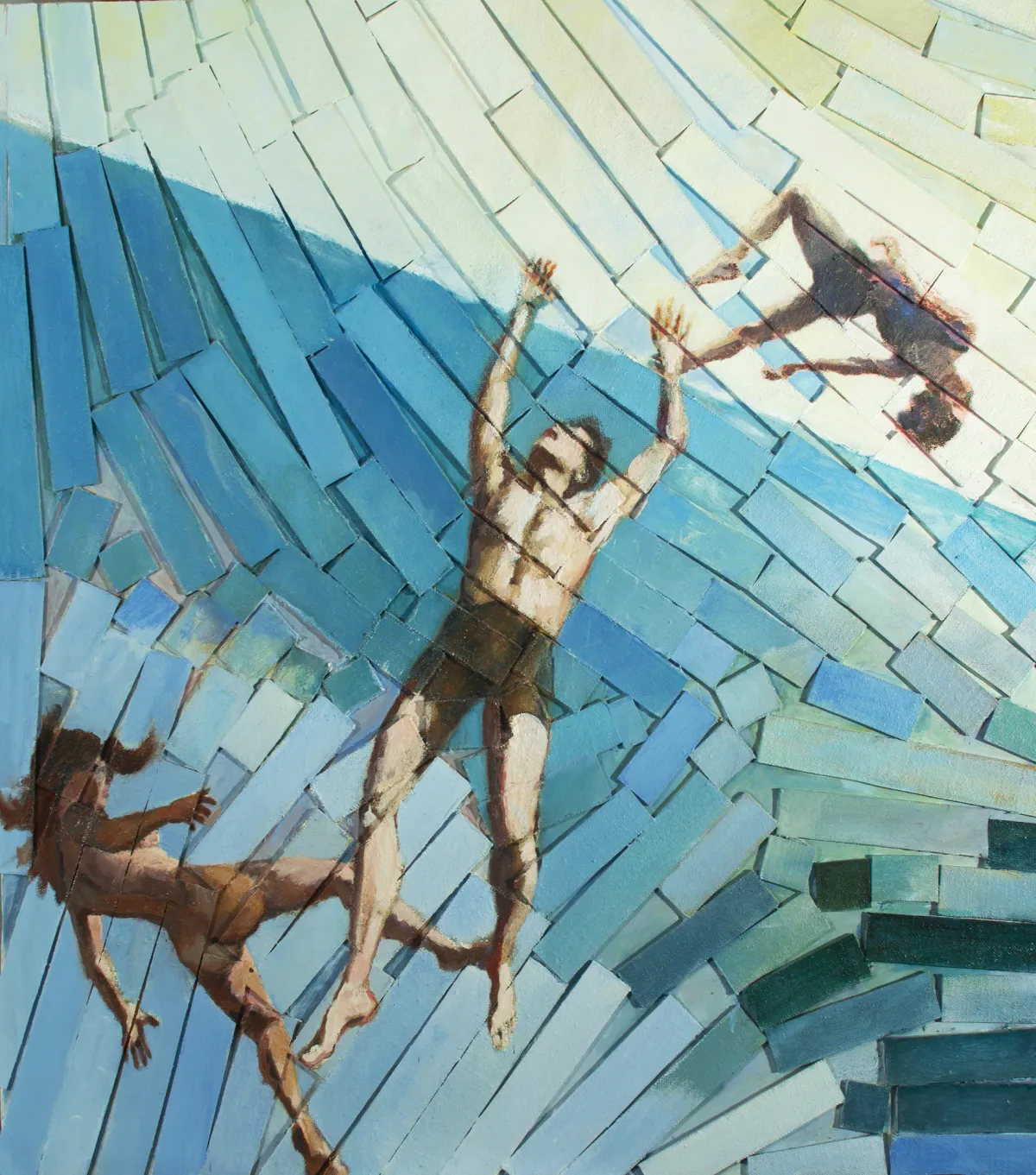
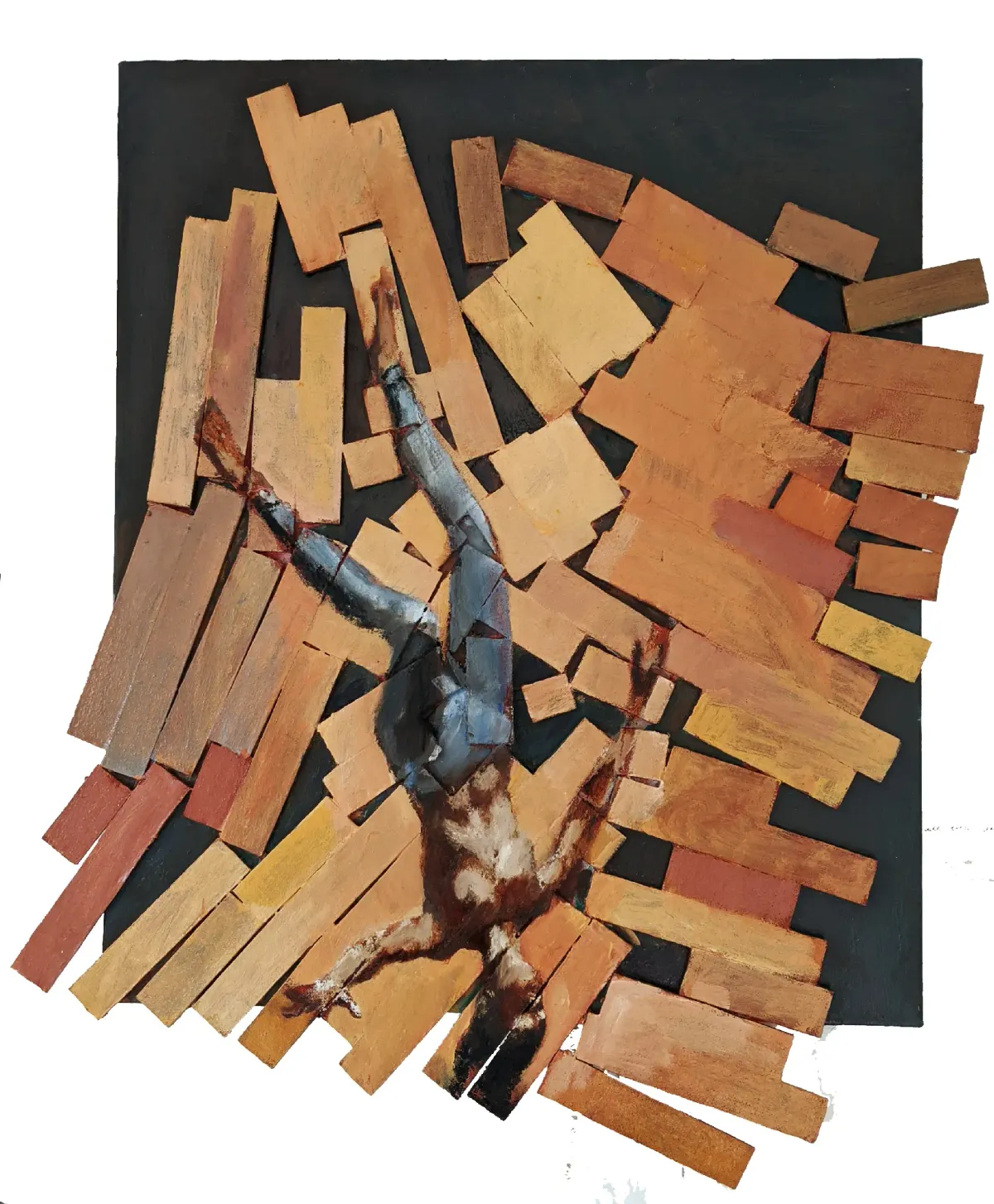
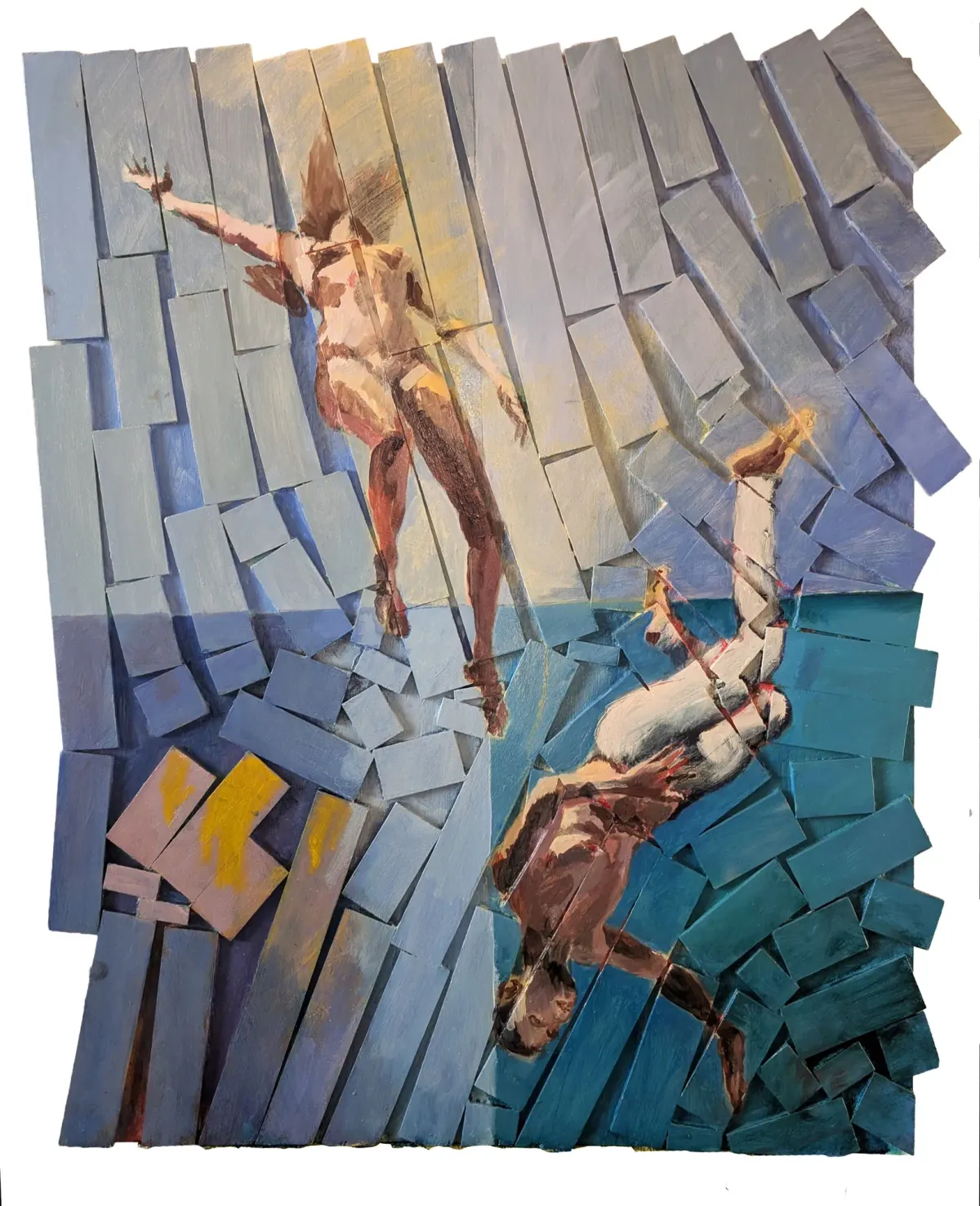
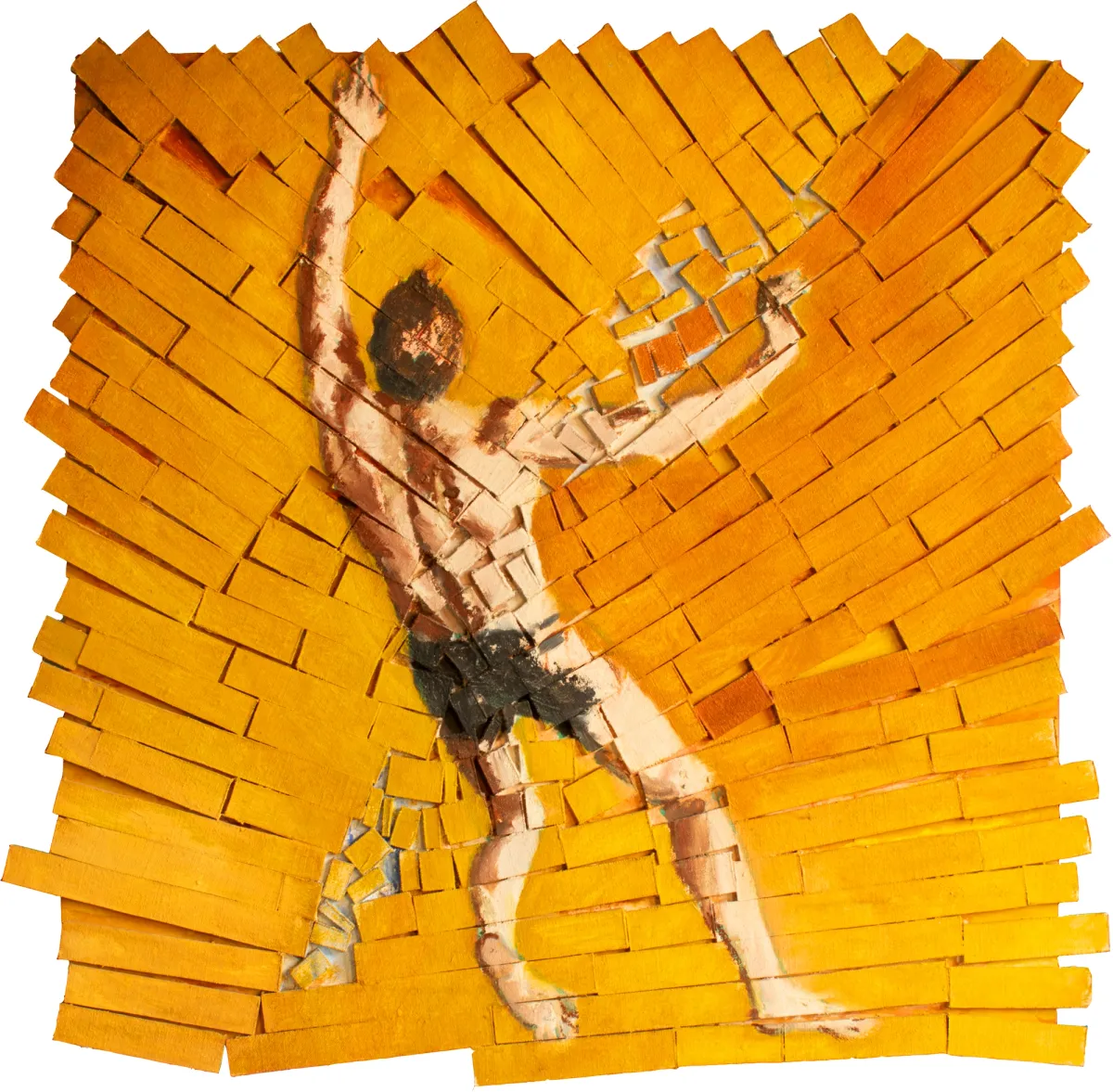
This exploration evolved into a broader study of fragmentation. By physically cutting canvas-coated wood, Stedman examines the psychological and physical distance between individuals. The human figures in these works are often disrupted by the voids between the strips, suggesting that we are either carried by or broken by chaos. The gaps offer a glimpse into an "alternate universe" or a hidden layer of reality, visible only through these intentional fractures.
While the series title alludes to the never-ending patterns of fractal geometry, the application is conceptual rather than literal. The wooden strips frequently extend beyond the traditional boundaries of the canvas, implying that the fragmented pictorial space continues indefinitely.
Key works in this trajectory include the two versions of Edge, followed by Jump, where a female figure is captured mid-leap through a vertically striped, abstract landscape. This thematic path led to the monumental Man Spinning in a Fragmented Universe.
Stedman also utilized a fretsaw to cut plywood into jagged forms, such as the sea stacks found in his later compositions. This subtractive technique serves to emphasize the "irredeemable separations" between objects, and ultimately, the existential distance between the self and the other.