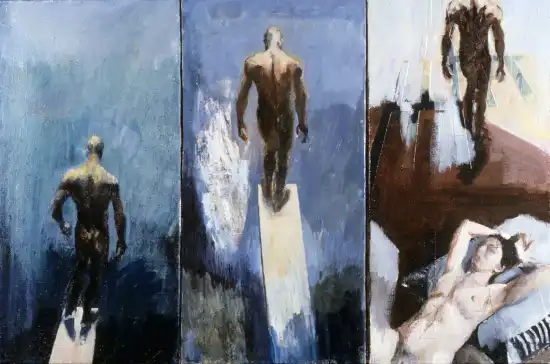
Polyptychs
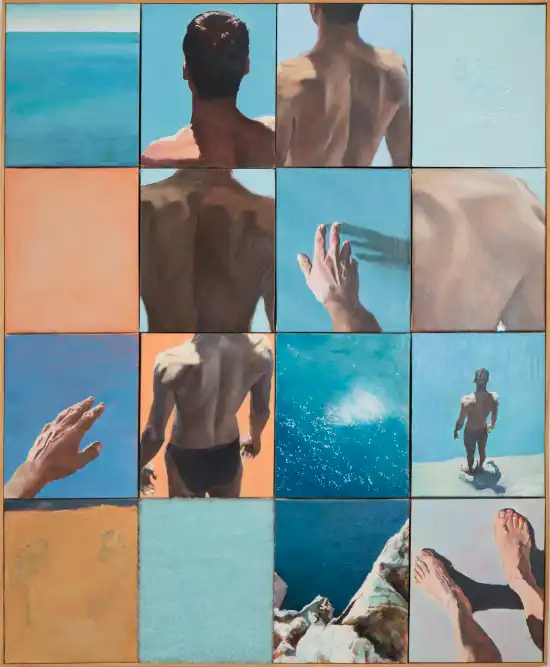
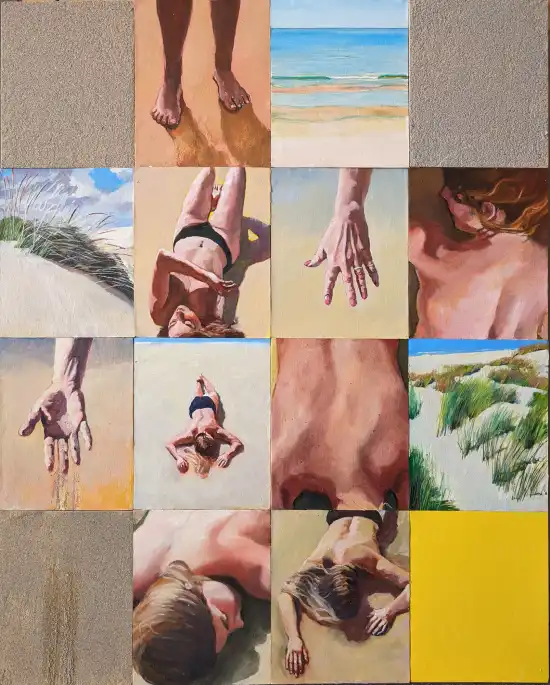
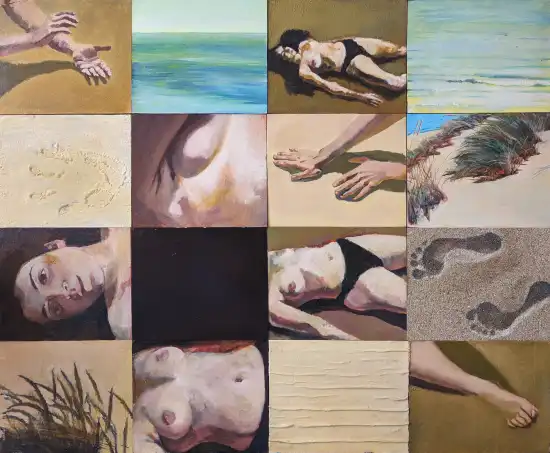
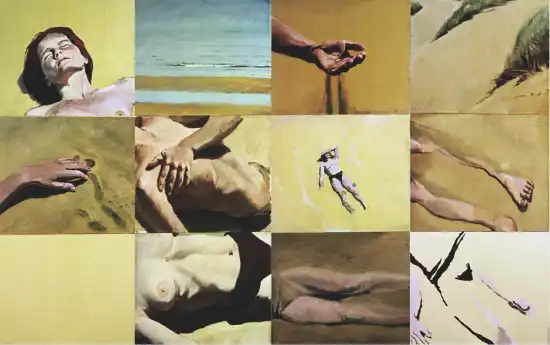
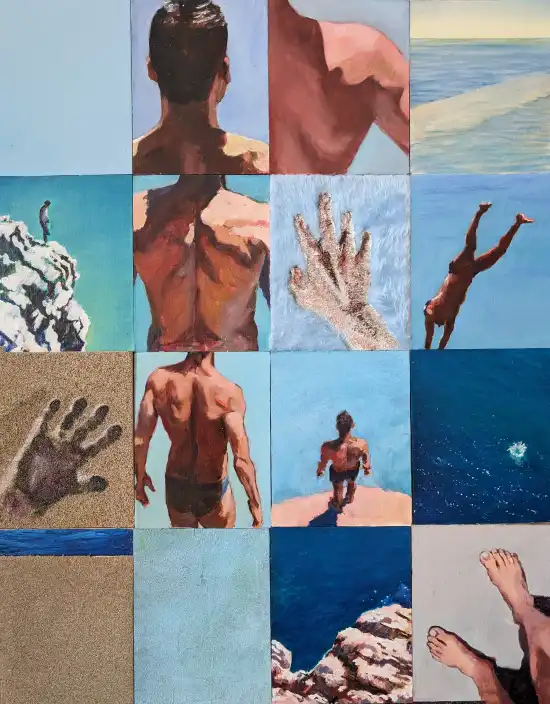
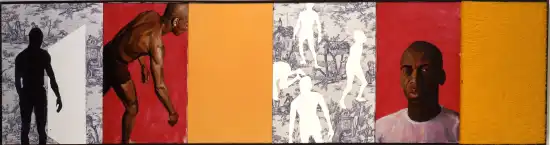
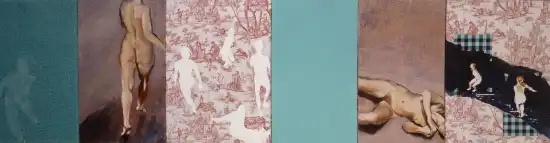
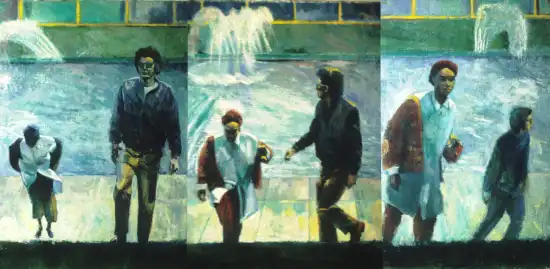
In 2001, Nicholas Stedman inaugurated his major series of Polyptychs, in which he achieved for the first time a synthesis between very close-up portraiture and tactile materials. Each polyptych imposes a new dialogue: sometimes the synthetic fur literally emerges from the canvas, sometimes it is through a simple pictorial effect, sand dunes, stylised waves, that these textures are revealed, inviting us to touch them. This combination of image and material reinforces the narrative dimension: like a book that needs to be assembled to tell its story, each panel contributes to the unfolding of a fragmented and intimate story.
Beyond the close-up, Stedman immerses the spectator in an experience that is at once physical, cerebral and sensory: a veritable inner dance. The artist dissects not only the human body, but also the psyche, confronting it with isolated natural elements that are examined as if under a microscope. Even more surprisingly, the appearance of a second viewer in certain panels offers an image in the image of the act of seeing, suggesting that observation is itself part of the work. Through this play of mirrors, Stedman anticipates the era of Instagram (created nine years later): the 4x5 format of the images, the idea of juxtaposed thumbnails and the staging of the gaze prefigure the way in which we now scrutinise, post and re-post fragments of life in a continuous stream.